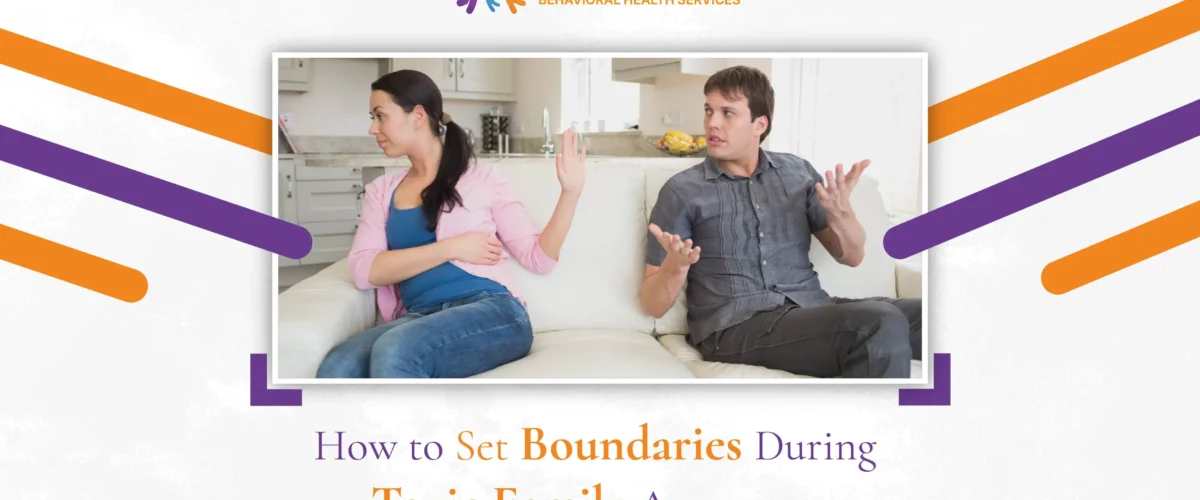
How to Set Boundaries During Toxic Family Arguments

How to Set Boundaries during Toxic Family Arguments

Every home has family disputes, sometimes people get upset over insignificant things, and other times they get loud, cruel, and very heavy. We call these toxic family arguments and they are terrible for all involved. Often you will be left feeling sad, scared, or with a hot anger deep in your chest. Even if you have a bad fight, you don’t have to feel this way forever, because you have a fundamental right to feel safe. A few simple rules can protect your mind and body.

What Are Personal Boundaries?

Boundaries are invisible lines that you safely draw around yourself. Think of them as personal rules that dictate exactly how others should treat you. Consider a tall wooden fence around a garden: it keeps pests out while protecting the delicate flowers inside. Similarly, when you establish personal rules, you safeguard your emotional well-being. While many people mistake boundary-setting for selfishness, it is actually a highly effective and healthy choice. It shows deep respect for yourself. It helps your family learn how to talk kindly to you.

Why Do We Need Rules?

Rules keep our minds happy. Without them, people might treat you badly (which happens more often than you think). Without them, people might treat you poorly by saying hurtful things or yelling without reason, which simply isn’t fair. Establishing rules helps stop the yelling before it starts by clearly showing angry individuals what is and isn’t acceptable. When everyone knows the rules, fighting stops. When everyone understands the boundaries, arguments de-escalate, allowing your home to become a calm, quiet space where you can finally relax and find real peace.

Signs of a Bad Family Fight

How do you know if a fight is truly toxic? Fights can get super loud fast. Look closely for clear signs of trouble. If you see these red flags, protect yourself right away. Use your new rules to stay safe.

Look out for these signs:

  • People yell loudly instead of talking.
  • No one listens to anyone else.
  • Someone calls you an ugly name.
  • Someone makes fun of you.
  • A relative brings up old mistakes.

Steps to Make Rules before a Fight

The best time to make rules is right now. Do it when everyone is calm and happy. Never wait until people are mad. When you talk during a quiet time, people actually listen. They hear your words much better. You can stop huge problems before they start.

Follow these easy steps:

  1. Find a quiet, safe time to talk.
  2. Make sure no one is hungry.
  3. Speak from your heart softly.
  4. Tell them what hurts your feelings.
  5. Ask if they understand your rules.

What to Do When the Yelling Starts

Even with great rules, fights will still happen. When the loud yelling starts, you must be ready. You have the power to stop the anger fast. You do not have to scream back. Choose a much better, quieter way.

Follow these steps when a fight happens:

  1. Take a deep breath to calm down.
  2. Keep your voice very soft.
  3. Look the angry person in the eye.
  4. Say your rule in a clear voice.
  5. Do not argue with a mad person.
  6. Walk away if they keep yelling.

Simple Words You Can Say

Sometimes it is hard to find the right words. Your brain might stop working when someone yells. That is okay. Practice your words early. Learn short sentences to say. Keep them safe in your mind for later.

Try using these simple words:

  • “I will not talk when you yell.”
  • “Please do not call me names.”
  • “I am walking away now.”
  • “We need to calm down right away.”
  • “I will come back in ten minutes.”

Why Walking Away Is Brave

Many feel guilty when walking away, mistaking it for a weak choice or a lost battle, but this couldn’t be further from the truth. Walking away is a brave decision that requires immense strength. When you leave the room, you remove their target and stop the fight cold. This stops the bad cycle right away. You protect your peace of mind. You teach your family that you need respect. Your health is the most important thing.

How Good Rules Help Everyone

Setting rules helps you, it helps your family to grow. Families do bad things repeatedly, they may not even know they are doing it. Somebody has to break the ugly habit, be the brazen one. By not participating in toxic arguments, you are showing a better way to behave and how to solve problems without getting worked up. Kids are pretty perceptive, and if they see you handle conflict constructively, then they learn how to maintain their own emotional safety. All of us sleep much better with a peaceful home.

Healing With Legacy Family & Behavioral Health Services

Sometimes familial relationships are just too much to deal with alone and the best next step is to reach out for help from caring professionals. Richmond, Virginia families are finding positive ways to move forward with the help of the team at Legacy Family & Behavioral Health Services, led by Asia J. Velazquez. We use your strengths to give you caring, professional guidance so you don’t have to face a crisis alone.

FAQs

Q. Is it bad to walk away from a fight?

No! Walking away is very brave. It stops the angry fight right away. It keeps you safe and protects your peace.

Q. Who can help my family?

Legacy Family & Behavioral Health Services can help. We are caring experts who guide families. We can help your family find a much better way to talk.

Could Intensive In Home Services Help Your Family Prevent a Mental Health Crisis

Could Intensive In-Home Services Help Your Family Prevent a Mental Health Crisis?

Life at home can be hard sometimes. Kids have big feelings. Parents get tired. Everyone argues. Some days, it feels like your family is falling apart. You might worry about your child’s behavior. You might fear things are getting worse. You might wonder if someone will have to leave home to get help.
But there is another way. Intensive In-Home Services (IIH) can help families right in their own homes. These services bring support to you. You do not have to go to an office. You do not have to send your child away. Help comes to your door.
Legacy Family & Behavioral Health Services offers Intensive In-Home (IIH) Services, delivering mental health support to enhance family communication and reduce conflict.

What Are Intensive In-Home Services?

Intensive In-Home Services are special mental health services for children, teens and families who are facing serious emotional or behavior problems.
These challenges may make it hard to:

  • Get along at home
  • Do well at school
  • Feel safe in the community

The goal is to help families stay together and stay safe.
Unlike regular therapy in an office, Intensive In-Home Services happen in your home. This helps the care team see what daily life is like for your family.
Your support team may include:

  • Therapists
  • Counselors
  • Mental health professionals
  • Family support specialists

The team listens to your family, learns about your challenges and creates a plan that fits your needs.
Every family is different. Services focus on your family’s strengths while helping with areas that cause stress.
Some programs also offer 24/7 support, so families can get help during difficult moments.

How Intensive In-Home Services Help Prevent a Mental Health Crisis

A mental health crisis can happen when feelings, behaviors, or family problems become too hard to handle.
Early help can prevent problems from getting worse. Intensive In-Home Services help families:

  • Understand their challenges
  • Learn better ways to communicate
  • Handle stressful moments
  • Create a calmer home

At Legacy Family & Behavioral Health Services, Intensive In-Home Services focus on crisis prevention by helping families understand their challenges and find practical solutions.
Services may include:

  • Home-Based Mental Health Services
  • Family Stabilization
  • Crisis Prevention
  • Behavioral Interventions
  • Family Functioning Support

Each service is designed to help families feel more prepared, connected and confident.

Home-Based Mental Health Services

Getting help at home can make things easier. Home is where families spend their time. It is also where many problems happen. So, it makes sense to solve problems right where they happen.
Home-based services mean:

  • The therapist sees your real life
  • They observe how your family interacts
  • They identify triggers for arguments
  • They provide advice that fits your life

Legacy Family & Behavioral Health Services brings mental health support to your living room. You do not have to drive anywhere. You do not have to find childcare for other kids. You do not have to take time off work. The help comes to you. This makes it easier for families to get the support they need.

Family Stabilization

In a family crisis, stress and fear can overwhelm everyone. Family stabilization aims to restore calm and safety.
It involves creating stability, improving communication and establishing routines to prevent the crisis from worsening.
Think about a boat in rough water. The boat needs help to become steady again. Family stabilization helps your family find balance during difficult times.
At Legacy Family & Behavioral Health Services, we work to keep families together and help children stay safely at home.

Crisis Prevention

One of the greatest strengths of Intensive In-Home Services is crisis prevention.
The best way to handle a crisis is to stop it before it starts. Crisis prevention is about:

  • Spotting warning signs
  • Taking action before things get bad

Crisis prevention means learning to spot triggers. Ask yourself:

  • What makes your child upset?
  • What starts the arguments?
  • What makes things worse?

Knowing your triggers helps you avoid or manage them effectively.
It also means having a plan. Ask yourself:

  • What will you do when things get hard?
  • Who will you call?
  • What steps will you take?

A plan gives you control and keeps you calm during challenges.
At Legacy Family & Behavioral Health Services, our team helps families create these plans. We teach skills to manage difficult moments. We provide tools to de-escalate situations. We help you feel prepared instead of scared.

Behavioral Interventions That Support Positive Change

Children and teens may show their feelings through their behavior.
Behaviors like anger, fighting, shutting down, or acting without thinking may show that a child needs help.
Our Behavioral Interventions focus on understanding why a behavior happens.
We help families:

  • Identify behavior patterns
  • Understand emotional triggers
  • Encourage positive behaviors
  • Reduce challenging behaviors
  • Build self-control
  • Improve emotional regulation

Parents also learn ways to respond calmly and support their child’s growth.

Family Functioning Support

A family is like a team. When the team works well together, everyone wins. But sometimes teams struggle. People do not communicate well. Roles are unclear. Everyone feels frustrated.
Family functioning support helps the whole team get better. It looks at how family members interact. It finds patterns that cause problems. It helps everyone understand each other better.
Maybe:

  • Parents disagree on how to handle things
  • Siblings feel left out
  • There is too much conflict and not enough connection

Our team helps address all of these issues. We help caregivers be more responsive to their children. We improve family interactions. We help everyone feel heard and valued.
When families function better, everyone benefits. Kids feel safer. Parents feel more confident. The whole home feels more peaceful. This peace helps prevent future crises.

Who Can Benefit?

These services are for families who are struggling. They are for:

  • Kids with serious emotional or behavioral challenges
  • Families at risk of falling apart

Maybe:

  • Your child has been diagnosed with a mental health condition
  • They have experienced trauma
  • They are acting out in ways that scare you
  • You feel like you have tried everything and nothing works

If you are worried about your child’s behavior, these services can help. If you feel like you are at the end of your rope, these services can help.

Creating a Healthier Future Together

Families do not have to face mental health challenges alone. With compassionate guidance, practical support and evidence-based care, it is possible to strengthen relationships, reduce emotional stress and prevent future crises.
Contact us for support for you, your child, or your family. Legacy Family & Behavioral Health Services is here to help.
We offer Intensive In-Home Services that bring therapeutic support right to your door.
Our services include home-based mental health services, family stabilization, crisis prevention, behavioral interventions and family functioning support.
We are dedicated to strengthening families, preventing crises and improving everyday functioning. If your family is struggling, we are here to help.

FAQs

Can parents join in-home therapy?

Yes, family involvement is crucial for improving relationships and ensuring long-term success.

Are in-home services the same as home healthcare?

No, in-home mental health services focus on emotional and psychological support, not general medical care.

Why Do Healthy Family Relationships Matter for Mental Well Being

Why Do Healthy Family Relationships Matter for Mental Well-Being?

Our story begins at home. The people we live with shape our views and teach us to trust. A conflictual household can lead to constant anxiety. In contrast, a loving and supportive family offers safety and mental peace.
Family offers the support and inspiration necessary to endure the toughest days. A caring family can be a refuge when life gets tough. They aid in developing mental strength and resilience. Let’s delve into the importance of these connections for our health.

What Makes a Family Relationship Healthy?

No family is perfect, it’s just a fact of life for every family. Instead, a healthy family looks after each other as a team as they work through problems that will happen.
How would you describe a healthy family? Let’s examine some pretty obvious indications.

  • There is open dialogue and listening.
  • All can express their own emotions (including bad ones).
  • Family members value and honor personal space and private time.
  • Big support is displayed during very rough times.
  • After a fight, family members make up.

A solid family provides a nice place to crash. Life is easier with a caring family. Don’t fear mistakes; a healthy family accepts you as you are.

How Good Family Bonds Boost Your Mind

Having a loving family changes how your brain handles stress. When you feel loved, your mind can relax. Official information from the Centers for Disease Control and Prevention (CDC) shows that strong family bonds are a huge part of staying mentally healthy.
Good relationships help your mental health in many simple ways.

  1. Lower Stress Levels: School and work can bring so much stress. Family support lowers your worry. You never carry the heavy load alone. You have helpers.
  2. More Self-Esteem: When your family cheers for you, you feel great. You learn to believe in your own skills. This helps you do well in life.
  3. Better Coping Skills: Hard times will always come. A healthy family teaches you how to handle sadness safely. You learn to cry without feeling weak.
  4. Less Sadness: Loneliness causes deep sadness. Feeling connected to your family makes you feel less alone. You always have a friend nearby.

The Real Impact on Kids and Teens

Raising children is best done in a secure setting and frequently they mirror their parents’ behavior when it comes to emotions. A peaceful home is a solid base for learning and concentration, while a stressful or frightening one can cause problems in learning and focusing.
Teens, like adults, also require family support. Positive family connections help adolescents make better choices. They feel confident sharing their negative concerns with parents. This is a great open talks. It safeguards children from bullying. Parents are the most important asset in developing mental wellness. A loving home protects like a shield. It shields them from the outside world.

Common Struggles Families Face Today

Building a happy family takes hard work. Many families hit big bumps in the road. These bumps can cause distance between family members. People drift apart. What are some common issues families face right now?

  • Busy work schedules that leave zero time for family fun.
  • Money worries that cause big, loud arguments at night.
  • Big life changes like a sudden move or a brand new baby.
  • Poor habits where people yell instead of talking calmly.
  • Mental health struggles that go ignored for way too long.

These problems are very normal. Every family fights sometimes. The key is finding a way to fix them before they get much worse. You have to try.

Why Talking Matters So Much

Words have power. Our tone of voice towards our family is everything. A safe home is made with kind words. Its foundation is broken by rageful words. Mean words are hard to take back! Everyone feels valued when family talks with respect. You feel seen and important.
When feeling angry, use simple words to state how you feel without blaming. This small change in communication can boost listening. It also stops conflicts from turning into fights. In the end, good communication keeps a family close.

Simple Ways to Build Stronger Bonds

You can build a better family bond today. It does not take much money. It just takes a little time. Try these easy steps at home.

  1. Eat Meals Together: Try to sit down for dinner as a family. Turn off the TV. Put away the phones. Just talk about your day.
  2. Listen Without Judging: When a family member is upset, just listen. Do not try to fix it right away. Just let them talk.
  3. Plan Fun Activities: Go for a walk outside. Play a funny board game. Laughing together builds very strong ties.
  4. Say Thank You: Show thanks for the small things. Say thank you for dinner. Words of kindness go a very long way.

How Legacy Family and Behavioral Health Services Can Help

Sometimes, families need extra support. That is completely okay. You do not have to fix every problem on your own. Legacy Family and Behavioral Health Services is right here to help you.
Founders Asia J. Velazquez and Israel Velazquez III believe in family-centered care. We know healing happens when the whole family works together. We offer amazing help for kids, teens and adults.
What do we offer? Let us look at their great services.

  • Outpatient Therapy: Individual and family therapy to help you talk through deep problems.
  • Intensive In-Home Services: Therapy done right inside your home to stop a crisis and build peace.
  • Child and Adolescent Services: Special emotional support to help young minds grow strong.
  • Case Management: Expert help connecting your family with very useful community resources.
  • Parent Consultation: Caring coaching for parents who need help managing hard behavior.

Our team highlights your strengths, helps you develop coping skills and guides you toward lasting wellness.

Final Thoughts on Family Wellness

Your family is your best support! Strong relationships boost mental health. Everyday practices, such as attentive listening, can significantly impact your family. Don’t forget that pursuing professional support is perfectly acceptable; it promotes a healthier future for all.

FAQs

Q. What does a healthy family look like?

A healthy family is not perfect. They still have arguments sometimes. But they talk things out, listen closely to each other and fix problems together as a team.

Q. How can I build a better bond with my family?

Try simple daily habits. Eat dinner together without phones at the table. Listen when someone is upset without judging them. Say thank you for the little things.

Signs of Developmental Delays in Children

What Are the Signs of Developmental Delays in Children?

Every child grows and learns at their own pace. Some children walk early, while others take more time. This is often normal. But sometimes, a child may have trouble learning skills that most children their age can do. These skills are called developmental milestones.
A developmental delay means a child learns skills more slowly than peers. Delays can occur in one area or across multiple areas; the latter is called global developmental delay.
Our practice at Legacy Family & Behavioral Health Services is committed to using compassionate evaluations and tailored care. We offer ongoing support for children and families. Early detection of delays boosts children’s confidence and success.
Below, we outline common signs of developmental delays and what to do if you have concerns.

Understanding Developmental Delays

A developmental delay occurs when a child does not reach expected milestones within the typical age range. Delays may affect one area of development or several areas at the same time.
These delays fall into a few main areas.
One area is gross motor skills. These are big movements like rolling over, sitting up, crawling and walking.
Another area is fine motor skills. These are small movements. They often involve the hands and fingers. Examples include picking up small objects or holding a crayon.
Then there is language and communication. This includes both understanding words and using them to speak.
Cognitive development is about thinking, learning and solving problems.
Finally, social and emotional development is about how a child interacts with others and handles feelings.
Every child is different. Some reach milestones a little early. Others reach them a little late. This is often nothing to worry about. But when a child is far behind it is time to pay attention.

Signs of Developmental Delays in Children

Signs of Motor Delays

Motor skills involve movement. There are two types. Gross motor skills use large muscles. Fine motor skills use small muscles.

Gross Motor Signs to Watch For

By 3 months, most babies can lift their heads while lying on their tummies. Trouble doing this may be a sign of delay.
By 6 months, most babies can roll over and begin sitting with help. If they cannot do this, talk to a doctor.
By 9 months, most babies can sit without help and move around.
By 12 months, many babies begin taking steps. Not crawling, standing, or moving may be a concern.
By 18 months, most children can walk on their own. Not walking by this age may be a sign of delay.

Other signs include:

  • Not reaching for objects
  • Not using a pincer grasp by 10 months (using thumb and finger to pick up small items)

Fine Motor Signs to Watch For

Fine motor delays can show up in different ways. A child may:

  • Trouble holding a pen or crayon
  • Difficulty picking up small toys
  • Problems with tasks like buttoning clothes or using utensils

If your child forgets a skill, like holding a crayon, get help immediately.

Signs of Speech and Language Delays

Speech and language help children communicate with others.
Some signs to watch for include:

  • Not making sounds or babbling by 9 months
  • Not saying simple words like “mama” or “dada” by 12 months
  • Not using gestures like pointing or waving
  • Not saying words by 15 to 16 months
  • Not using about 10 to 15 words by 18 months
  • Not putting two words together by age 2
  • Being hard for others to understand by age 3

Other signs of speech and language delays include:

  • Not responding to sounds
  • Not imitating sounds or words
  • Not showing interest in communicating
  • Losing speech skills they once had

If your child suddenly stops talking or using words, get help right away.

Signs of Social and Emotional Delays

Social and emotional skills are about connecting with others. These skills help children make friends and understand feelings.
Some signs of social delays include:

  • Limited eye contact
  • Not showing interest in playtime
  • Not responding to their name
  • Not smiling at familiar faces
  • Not playing simple games like peek-a-boo

Some children may:

  • Line up toys instead of playing with them
  • Flap their hands or make repeated movements
  • Show little interest in other children

By 12 months, many children respond to their name and show different reactions to family members and strangers. If your child does not, talk with a healthcare provider.

Signs of Cognitive Delays

Cognitive skills involve thinking and learning. A child with a cognitive delay may:

  • Learn slower than peers
  • Stop progressing
  • Have memory issues
  • Struggle with logical thinking
  • Find cause and effect confusing

These delays often become noticeable when a child starts school, especially with colors, numbers or shapes.

What to Do If You See Signs

If you notice any signs of a developmental delay, do not wait. Early help is crucial. Start by talking to your child’s doctor. They can check for any physical problems causing the delay and may refer you to specialists for further testing.

Types of Help Available

  • Speech therapy assists with talking and understanding language
  • Occupational therapy helps with motor skills and daily activities
  • Physical therapy focuses on big movements like walking and running
  • Behavioral therapy supports social skills and behavior

Early intervention programs are also available for young children to support developmental skills.

How Legacy Family & Behavioral Health Services Can Help

At Legacy Family & Behavioral Health Services, we help children and families through every step of their journey.
We provide caring, evidence-based services for children and teens. Our team creates personalized plans to support emotional, behavioral, and developmental needs.

Our services include:

  • Early intervention support
  • Family therapy
  • Parent guidance
  • Help with emotional and developmental challenges
  • Support with IEP and 504 plans for school-aged children

Our family-centered approach emphasizes healing through family involvement, focusing on your child’s strengths to build confidence and resilience in a trauma-informed setting.

Final Thoughts

Noticing signs of a developmental delay can be frightening. Remember, you are not alone. Many families face this. The most important thing is to take action.
At Legacy Family & Behavioral Health Services, we are here to support you. We provide the tools, guidance, and care your family needs to heal and grow. Together, we can build a brighter future for your child.
If you have concerns about your child’s development, don’t wait. Contact your doctor or contact us at (948) 867-4808. We are here to help your family thrive.

FAQs

Can developmental delays improve?

Yes. With early intervention, therapy and the right support, many children can make significant progress. Addressing developmental delays as early as possible can often lead to better outcomes.

Are developmental delays the same as Autism?

No. Developmental delays and autism are not the same thing. Autism is a neurodevelopmental condition, while many children experience developmental delays without having autism.